Second Home in Italy – In Search of the Timeless Italian Home
For nearly two years, a thought has been living in me that does not leave me in peace. The idea of a home in Italy. The imagined location shifts at times… Taormina, Tuscany, or the island of Capri? The pull grows stronger week by week, and I feel the choice coming closer day by day.
I believe those of us who imagine a home in Italy — especially in Sicily, Tuscany or Puglia — are not simply looking for property, but for a way of living. Light, rhythm, clay. Mornings when sunlight filters through the shutters, and evenings when travertine still holds the warmth of the day. Thick walls that cool in summer and keep warmth in winter. These are part of the spatial logic that allows houses here to work across generations.
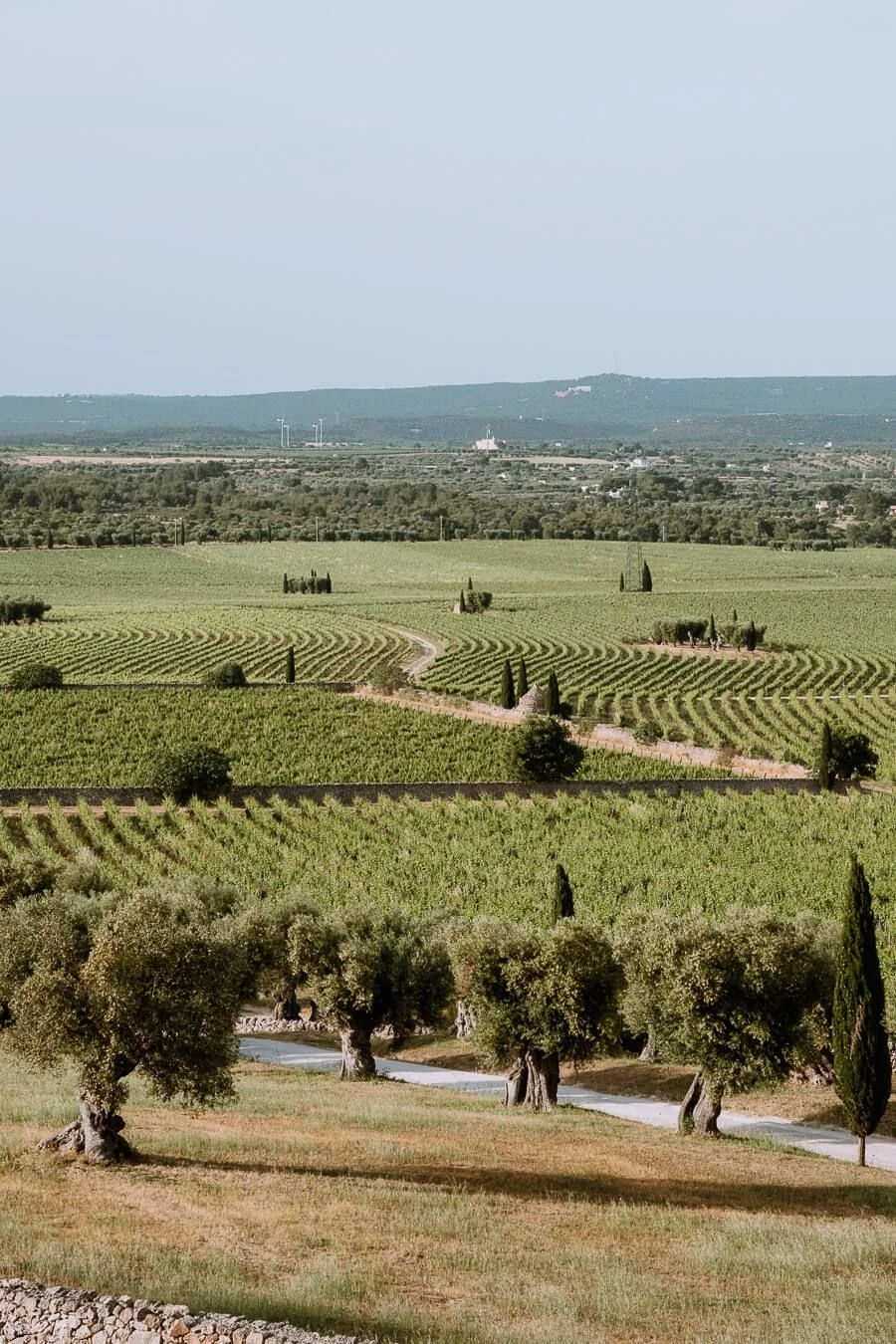
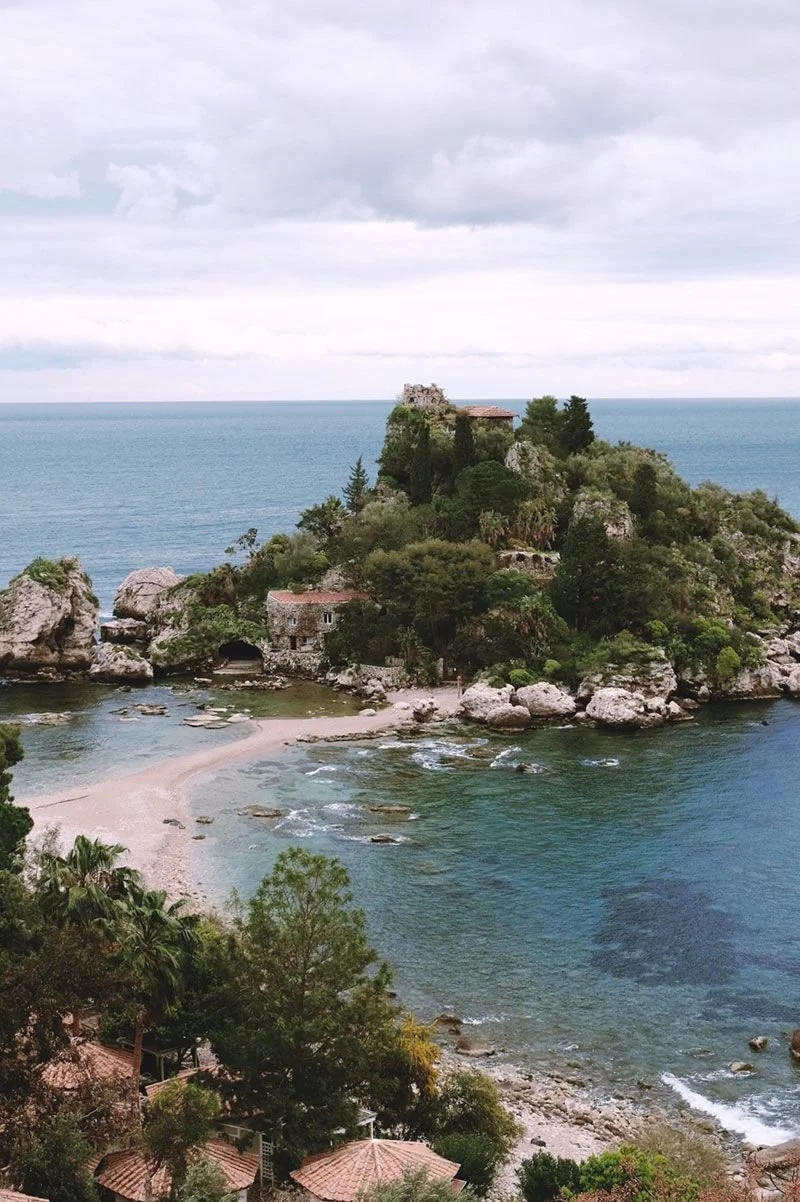
I believe this is where my profession begins to move beyond shaping interiors and enters the realm of designing a way of life. To me, an Italian villa is not only special because of the objects placed inside it, but because of the way it functions. I have noticed in myself that I can fall equally in love with a purist, slow-living retreat as with an elegant villa furnished with antiques or iconic Italian design pieces.
Location, I believe, is also a design question. A Sicilian house behaves differently from a Puglian masseria or a Tuscan stone house. The direction of light is different, the heat load is different, materials behave differently, and the transition between interior and exterior spaces functions differently. In a south-facing coastal house exposed to strong sun, shading and wall construction can be as important a choice as the interior itself. The depth of a pergola, the proportions of a loggia, the rhythm of openings all influence how livable the house feels in July.
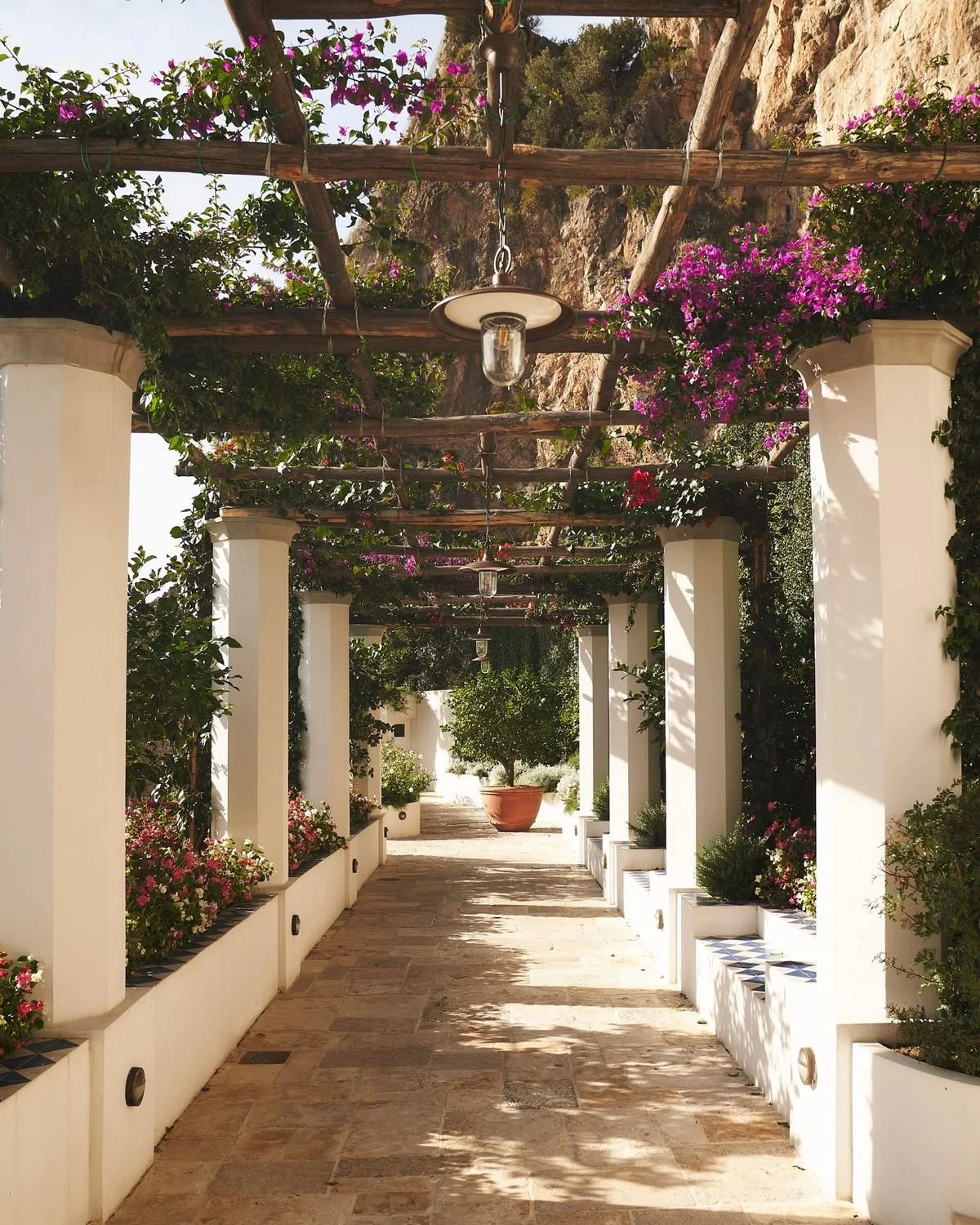
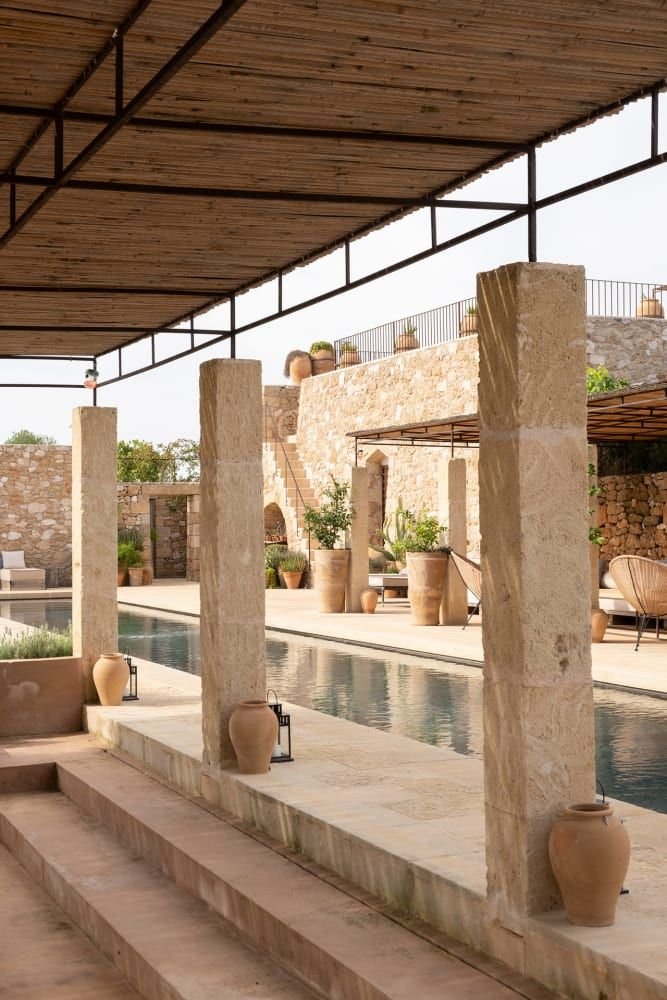
When we think consciously about a second home project, we also need to consider how the house will actually be used. Will it be a seasonal retreat? A property partly intended for rental? A meeting point for several generations? The same house requires a completely different spatial structure in each case.
I believe that if we are buying a house in Italy, it helps to see clearly that the real work begins long before selecting furnishings. An old stone house, a masseria, or even an apartment within a historic urban fabric follows its own logic, and it is worth understanding that logic before altering anything. In Italy, it is not uncommon for local regulations to define what can be touched, which windows may be replaced, which façade elements must be preserved, or which materials belong in a given context.
What I love about it is precisely that design here is not about imposing something onto a house, but entering into dialogue with what already exists. In many cases in Italy, involving a local geometra or architetto is part of the process, especially where CILA or SCIA permissions are required. I find this important because in a project like this, design often begins while reading the regulatory framework.
For me, renovation always begins by reading the character of the building. What does the house want to keep of itself? Where are the proportions, materials and details worth remaining faithful to? I often feel these are the layers that later become the soul of the home. Original terracotta flooring, a weathered stone wall, a vaulted ceiling or a deep window niche carry a quality that cannot be recreated later through decoration.
And of course, alongside the romance, there is reality. In most projects, the real costs appear in the invisible places. Bureaucratic processes, structural repairs, moisture treatment, building systems, local craftsmen, bespoke joinery details. I often see people thinking only in finishes or furniture, while the quality of a space is often grounded in far less visible decisions. For me, a well-considered renovation begins by asking what kind of quality of life we want to create.
The world of materials is a chapter of its own. Travertine, for example, has always been more than natural stone to me. There is a refinement in it that is difficult to put into words. The way it responds to light, the way its surface shifts through the day, the way it can feel both ancient and restrained at once. It is no coincidence that Italian architecture has returned to it for centuries. Underfoot it brings calm, on walls it has an architectural presence, and in a bathroom it creates a quiet, intimate atmosphere.
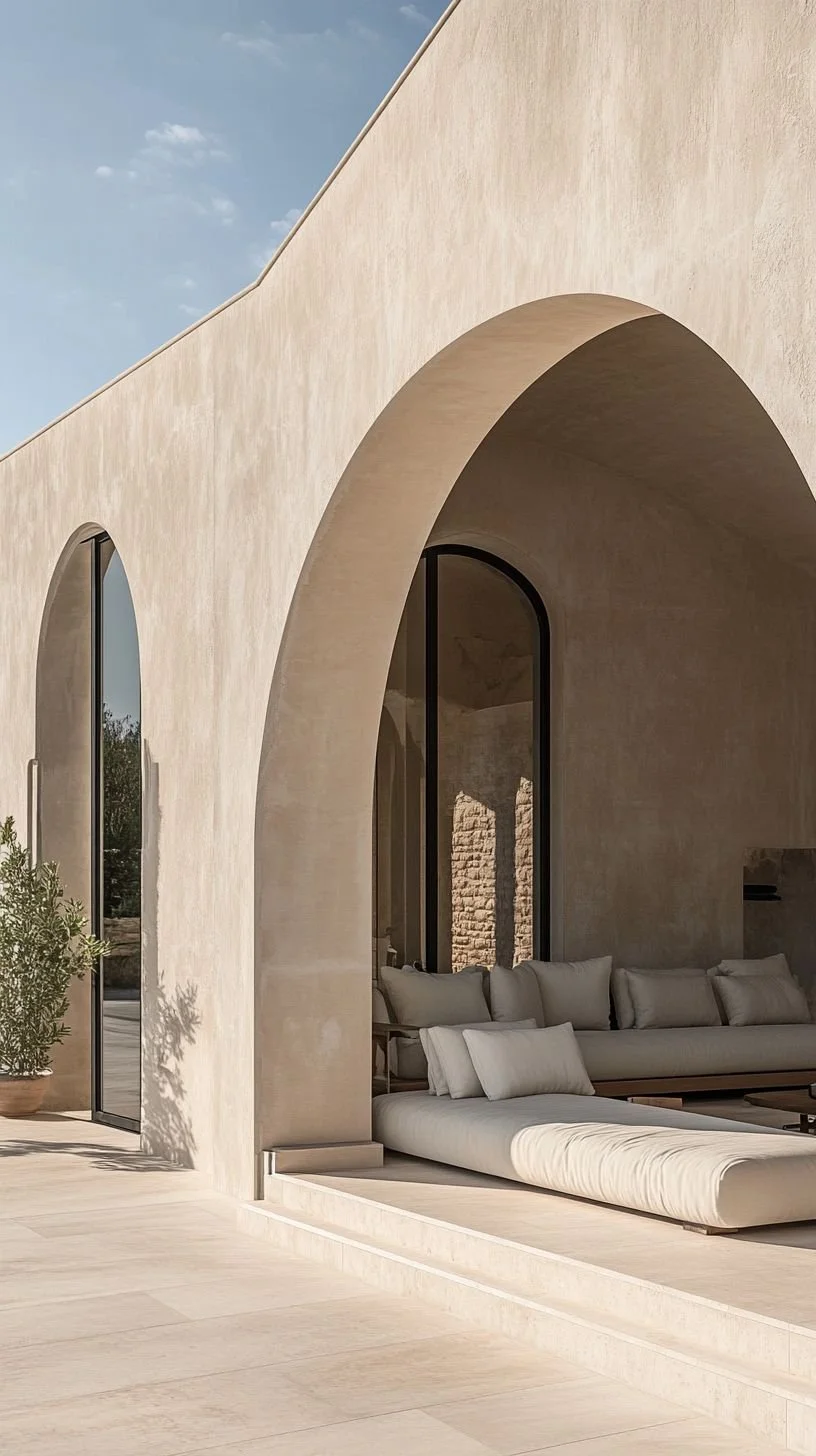
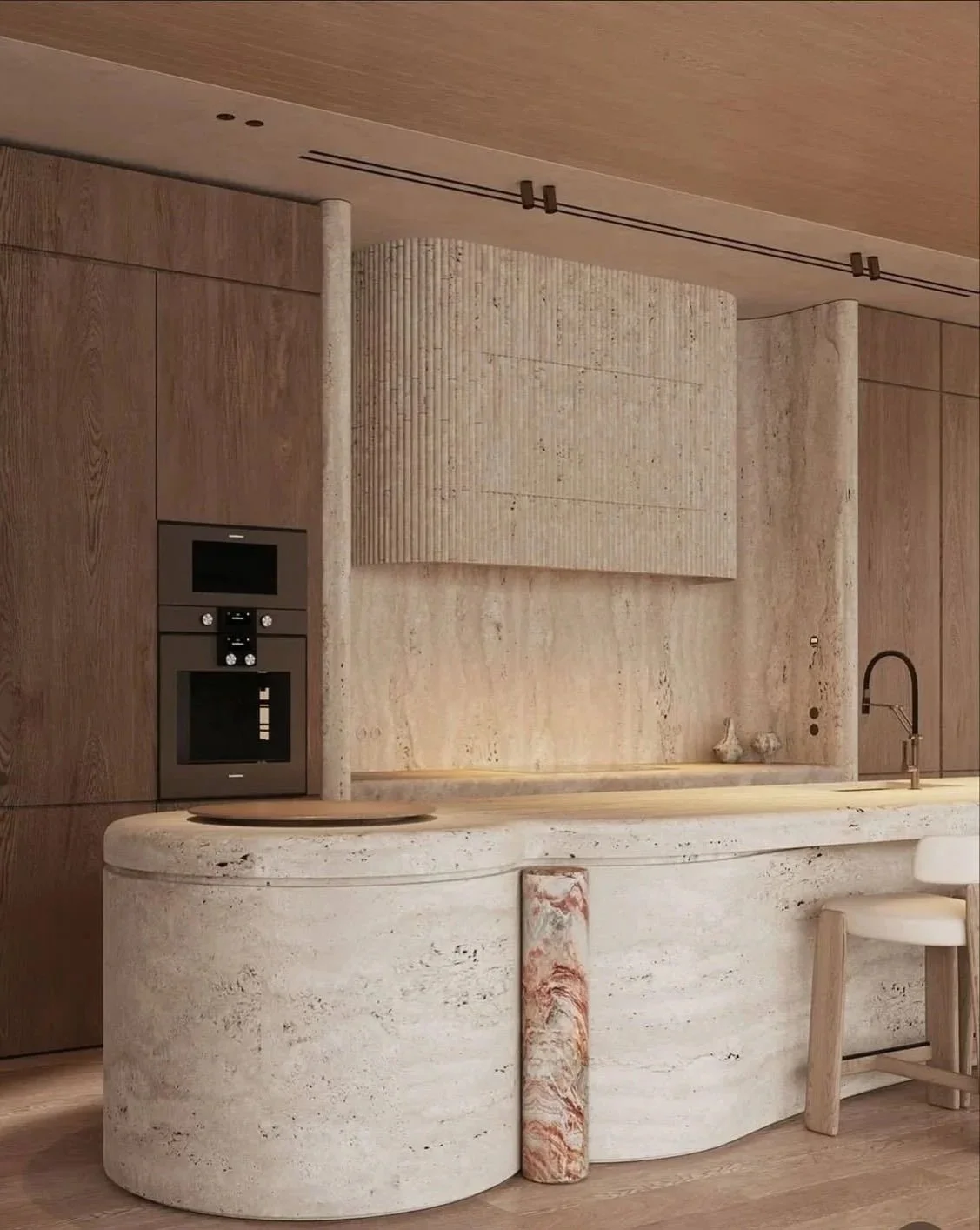
This is why I love terracotta too, especially when it appears as a truly handmade material. Its subtle irregularity, warm tones, the natural patina that develops over time these are all qualities that make a space feel more grounded, inviting and alive.
And speaking of Italian materials, marble cannot be left out. What fascinates me is how different the restrained character of Carrara feels from the drama of Calacatta, and how different both are from a warmer-toned Breccia stone. Which would I choose? A good question… always the one that best aligns with the character and rhythm of the space.
To me, marble works at its best when used as a compositional tool. It is more than a finish; it is a space-forming material. In a kitchen, an entirely different effect is created when it appears as a thin, restrained countertop, or when it drops down in a waterfall edge and gives monolithic weight to an island. A strongly veined Calacatta Viola, for example, can be most powerful when used on one singular surface — the kitchen island, around a fireplace, or as a statement wall where the veining becomes composition.
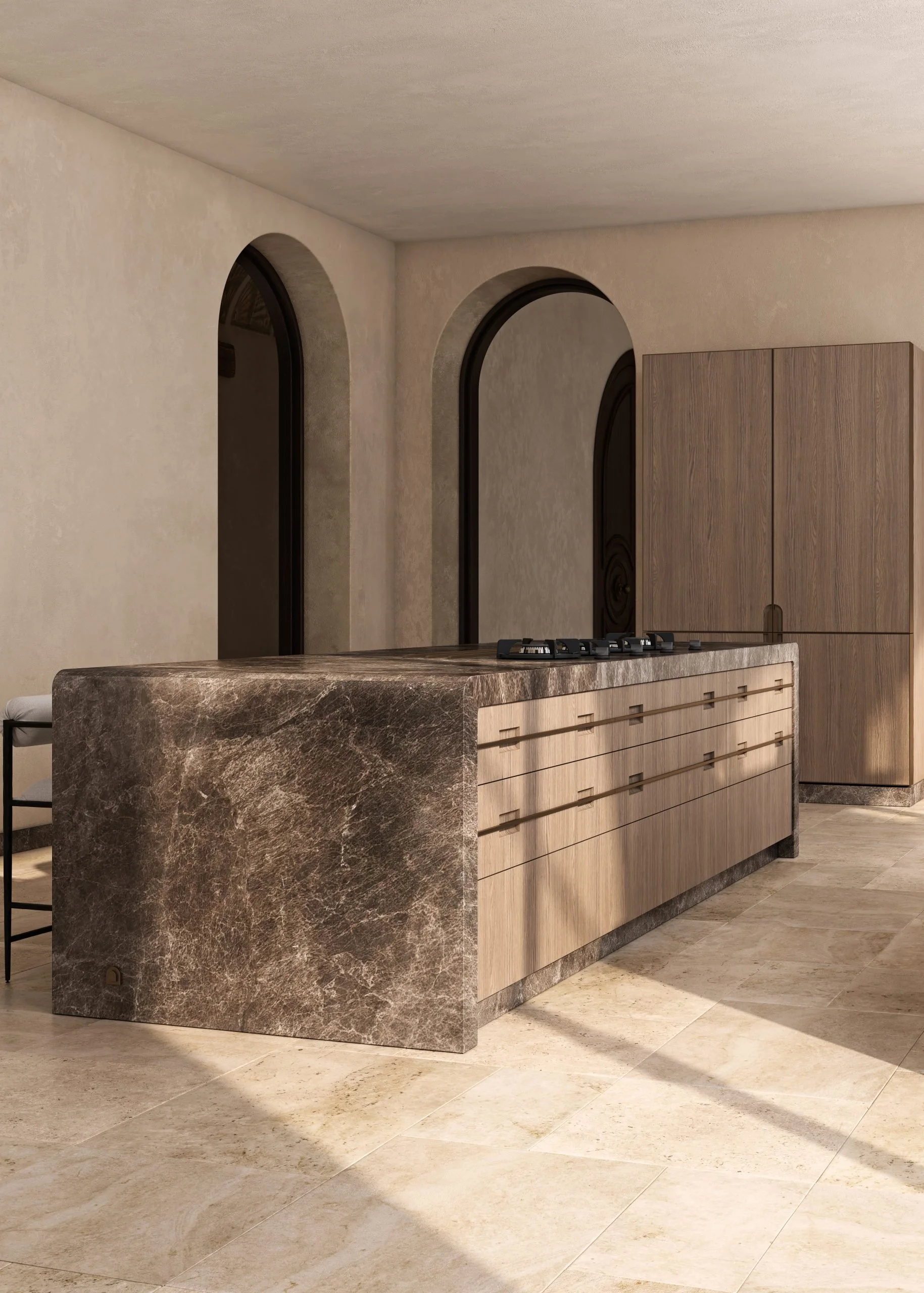
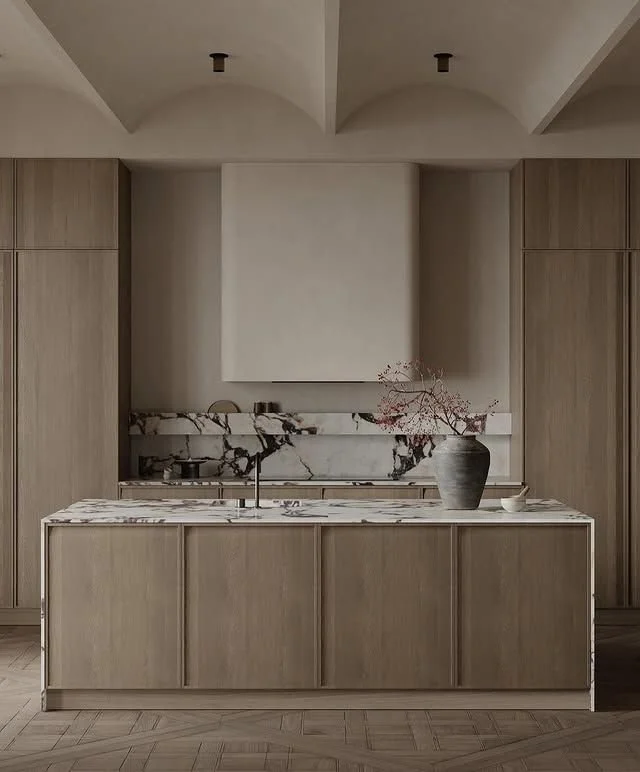
I believe edge detailing matters as well, because it can add to a kitchen’s character or take away from it if overlooked. An eased edge, with its softly refined line, can be almost invisible. In restrained spaces, this is often my preference. A bullnose profile feels more classical, carrying a kind of Italian naturalness, especially when relating to an older house. A thickened edge can make stone feel sculptural, but only when it remains in proportion to the mass of the cabinetry.
Lately, I also find it increasingly interesting when the countertop edge is emphasized through fine profiling, recessed detailing, or when the thickness of the stone itself becomes a defining feature. I am often asked whether marble is too delicate. My answer is always that yes, it is sensitive and asks for care, because it is a living material. It reacts to acids, it develops patina, it changes subtly over time. Perhaps that is precisely why it works so well in Italian interiors designed to last. I recommend it to those who can live with that. The beauty of stone lies not only in its veining, but in how it is cut, turned and joined. In slab layout, for instance, the direction of the veining can guide the eye through a space. When it moves with the main axis, it brings calm. When it moves against it, it can introduce subtle tension. In vein matching, the pattern meets across edges, corners, waterfall counters or the corner of a fireplace. These are the details we may not always be able to name, yet we feel them. Thickness is not merely technical either. A 20 mm slab brings lightness, while built-up edges can create something more monumental. Surface finish matters just as much. Honed marble, with its soft sheen, often feels more beautiful to me than polished stone, because it is quieter, more natural. Leathered or lightly textured finishes are simply wonderful to touch, especially in warmer-toned stones.
Walls are often neglected, yet a lime-based mineral wall has a depth that paint cannot imitate. The subtle clouding of limewash or Venetian plaster, the layering created by the movement of the hand, somehow lives together with light. It reveals a different face at every time of day. It becomes especially beautiful when paired with stone or walnut. Oiled walnut brings warmth, stability and a sense of home beside the coolness of stone.
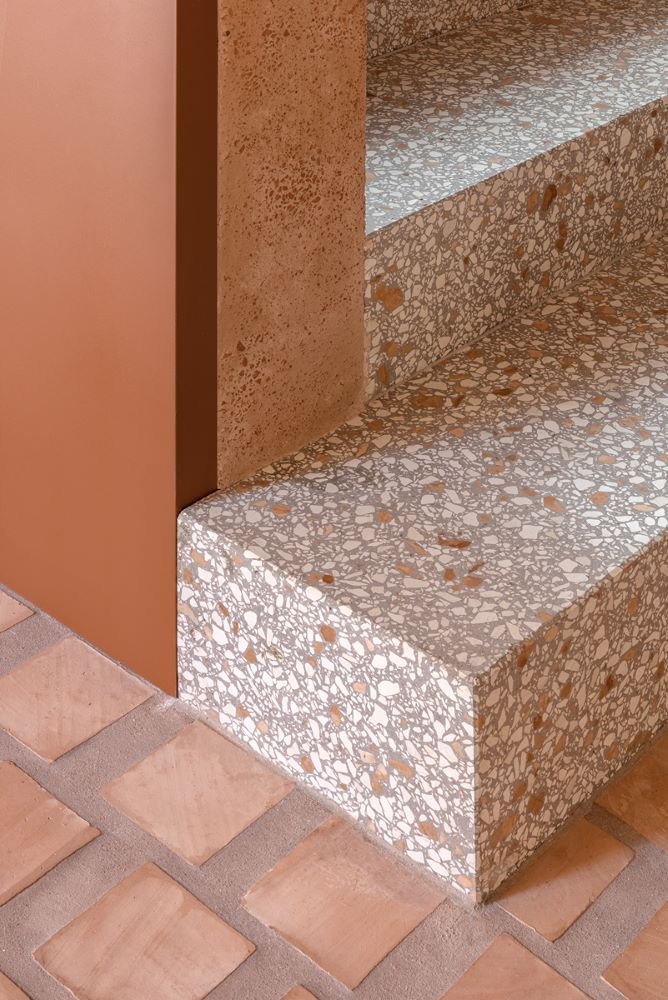
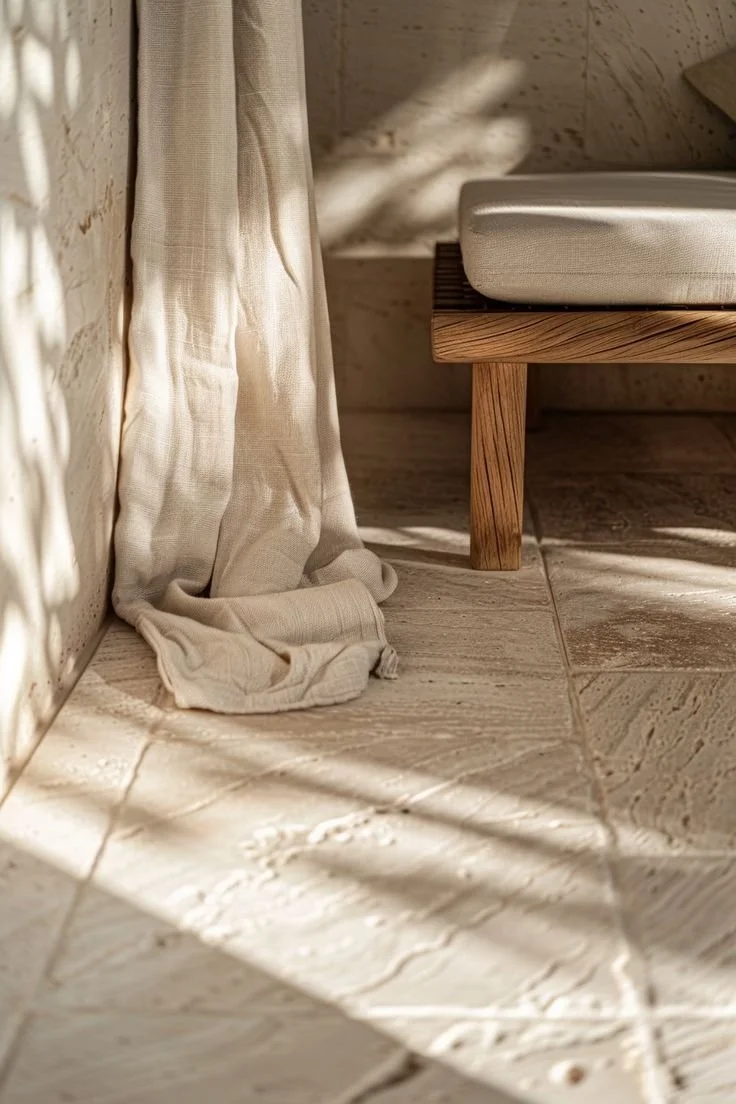
What I love most in Italian homes is how little they try to be visually impressive. Real quality in these houses reveals itself slowly. A well-composed Mediterranean interior works with few objects, relying instead on layers, texture and focal points. I believe a single well-placed gesture can say more than an entire decorative scheme. A stone vanity whose mass gives almost sculptural presence to a bathroom. An arched wall niche that brings rhythm to a wall. A dining table whose proportions and material become a focal point in themselves. Perhaps this is why I feel designing a second home always raises different questions than a primary residence. Here, design quickly meets operational and even investment thinking. Different decisions are needed for a house used a few months a year, and others when rental use or multi-generational living is considered. Storage, maintenance, material durability and remote management become part of the design itself. For me, a consciously designed second home is also about ensuring beauty and function never separate.
If I imagine, for example, a sea-facing Sicilian house of around 120 square meters, I would first study how morning light moves through the rooms, where the first coffee ritual belongs, where shade is needed in afternoon heat, and from where the most important axis should frame the landscape. I believe these shape the character of a house far earlier than any object. A good house, I believe, is built around experience, around the spirit of place, using natural materials, well-resolved proportions, compelling forms and textures. Perhaps that is why I feel a well-designed second home is not really a question of style, but a series of decisions about what retains value over time. What not only feels beautiful at first sight, but ages well ten or twenty years from now. And somewhere there, the idea of an Italian villa becomes more than desire to me. It becomes a place that receives you and also shapes the way you live. What a beautiful thought it is to have a place like that you can connect to, and know will always be waiting for you.
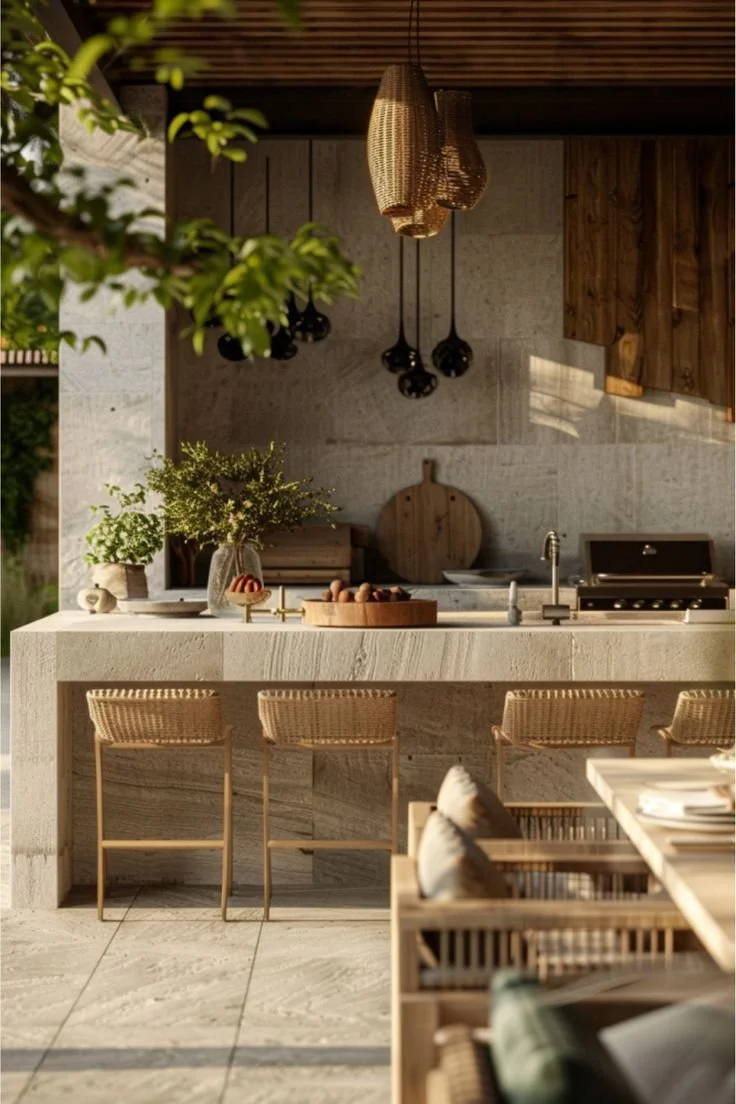
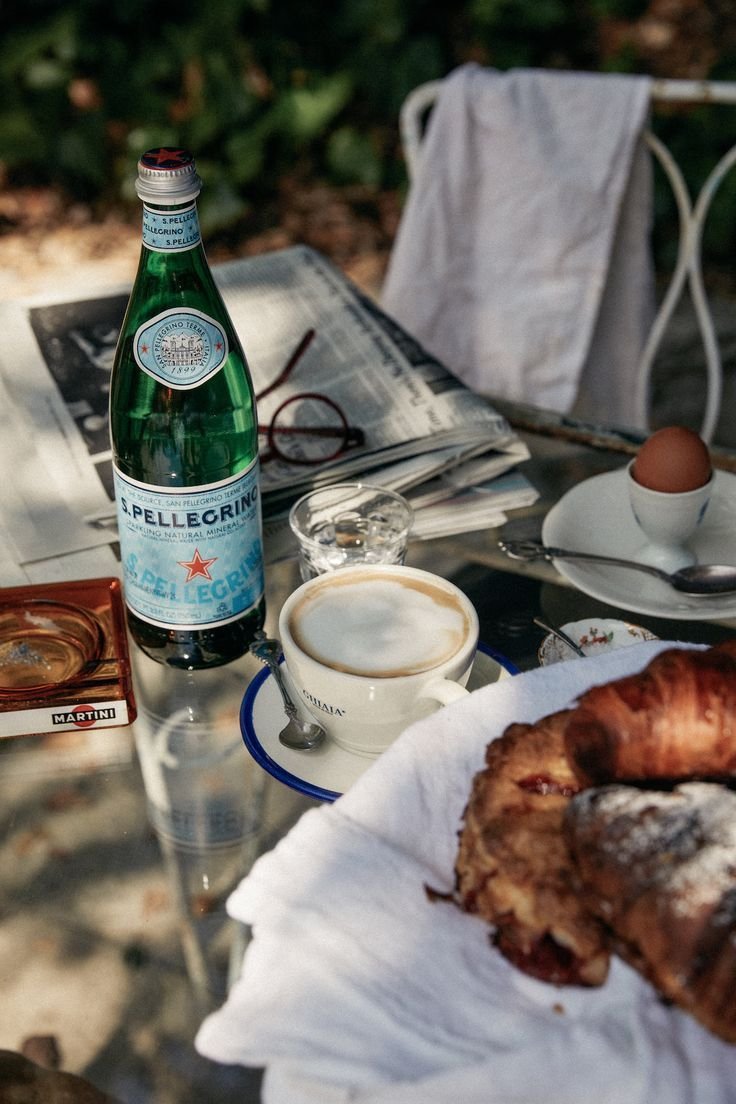
If the idea of an Italian home lives in you too — whether as a concrete second home project, or simply as a desire to bring this Mediterranean sensibility into your current home — the Flow & Function and the Signature Design process may be a contribution here as well.
A space like this begins with good questions. About light, proportion, the way you live. About how you want to feel in it. If this way of thinking resonates with you, explore our services. Your next project may be closer than you think.