Countertop Edge Profiles
There is a subtle detail in every well-designed kitchen that you touch several times a day, the edge of the countertop. This is where the space and your body meet. Where design is a lived experience. In a kitchen, most decisions are immediately visible. Colors, materials, proportions create an instant impression. Edge profiles, however, belong to a different layer. They are about perception. About sensitivity to detail. About that inner standard that simply knows when something feels right. I consider myself fortunate to work with clients who have moved beyond collecting inspiration. They are no longer saving beautiful images, they are ready to create something of their own. They seek homes that go beyond aesthetics and support a way of living. For them, the kitchen is more than a functional space. It is a place of connection. Morning coffee, spontaneous dinners, long conversations, friends, wine, presence. A space where every detail matters. Including the countertop edge, because this small detail is often the cherry on top.
One of the most commonly used edge profiles is the eased edge. A straight edge with a very slight softening at the corners. Technically simple, yet one of the most precise choices when the goal is a clean, timeless space. It allows the material to take the lead, especially when working with expressive surfaces such as marble or quartzite with strong veining.
A step further in character is the beveled edge, where a subtle angled cut (typically at 45 degrees) appears along the top edge. This small gesture catches the light, creating a fine shadow line that adds visual depth. It is not decorative in a traditional sense, yet it introduces a quiet layer of detail into spaces where minimalism is paired with refinement.
The half bullnose and full bullnose profiles represent a softer direction. In the case of a half bullnose, the top edge is rounded while the bottom remains straight, creating a balanced transition between structure and softness. The full bullnose, fully rounded on both top and bottom, offers an even more fluid and gentle feel.
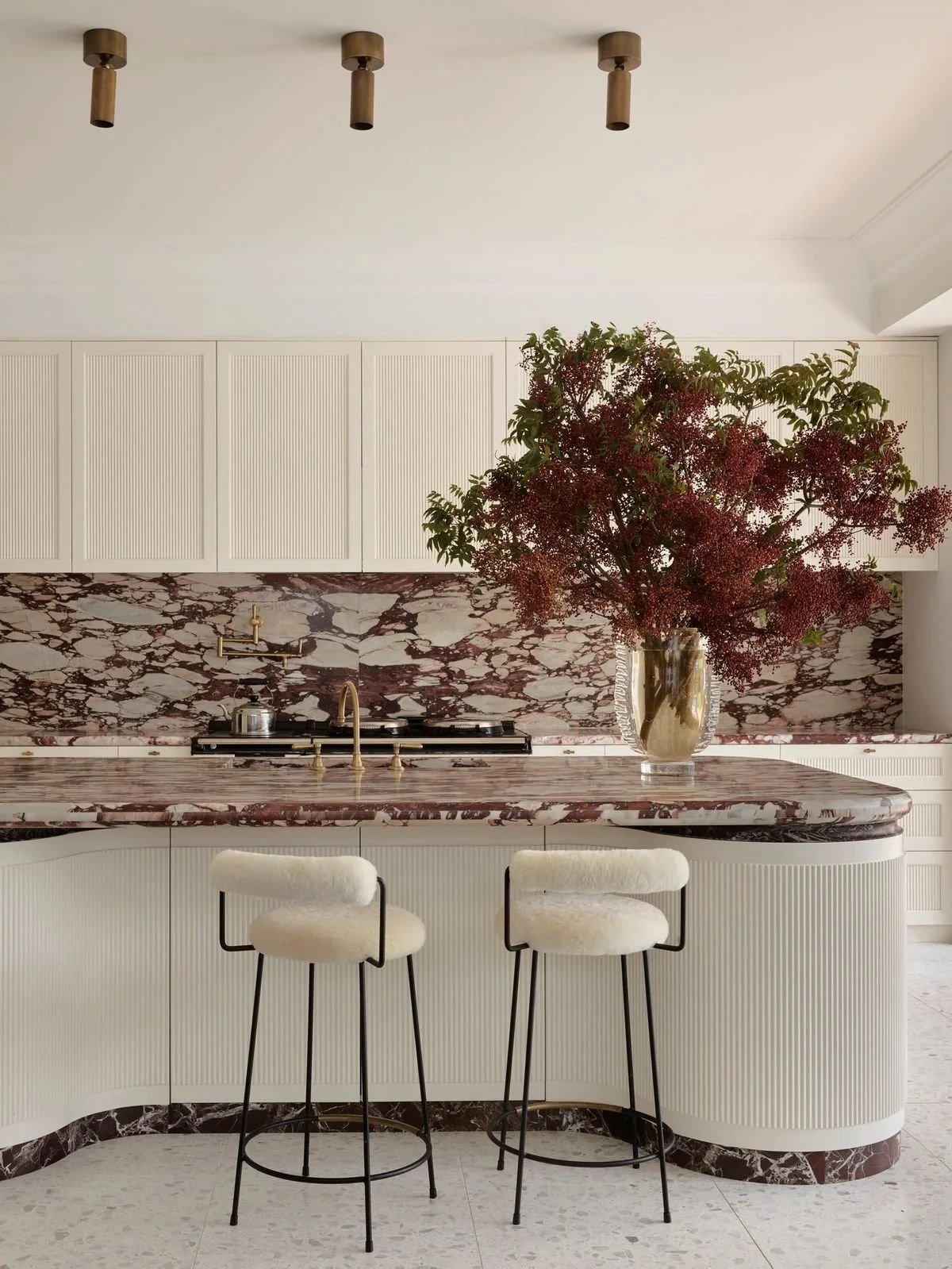
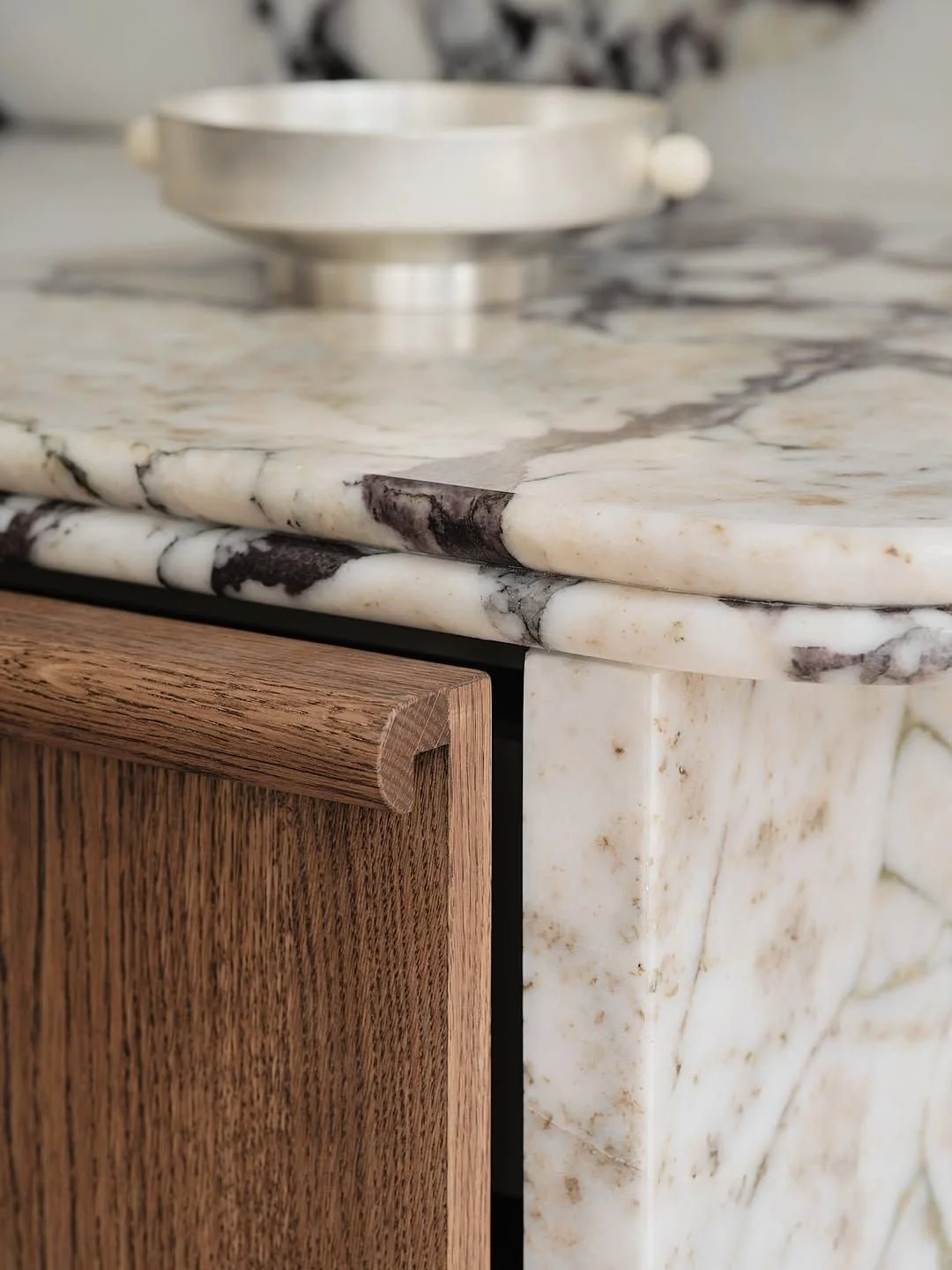
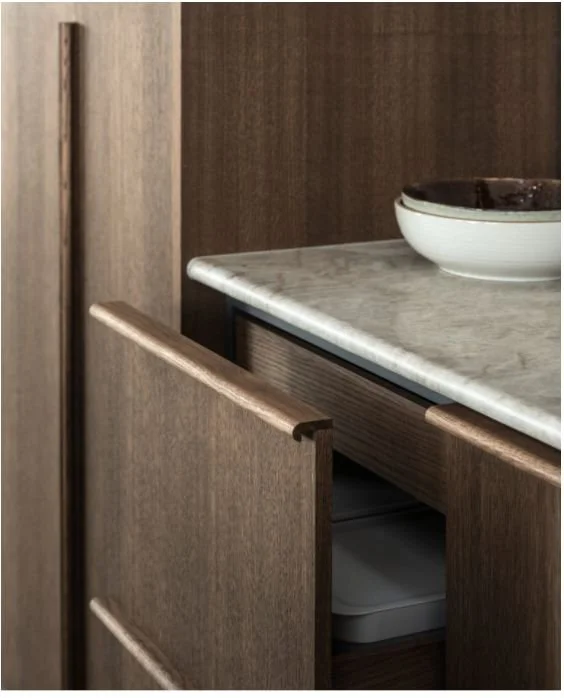
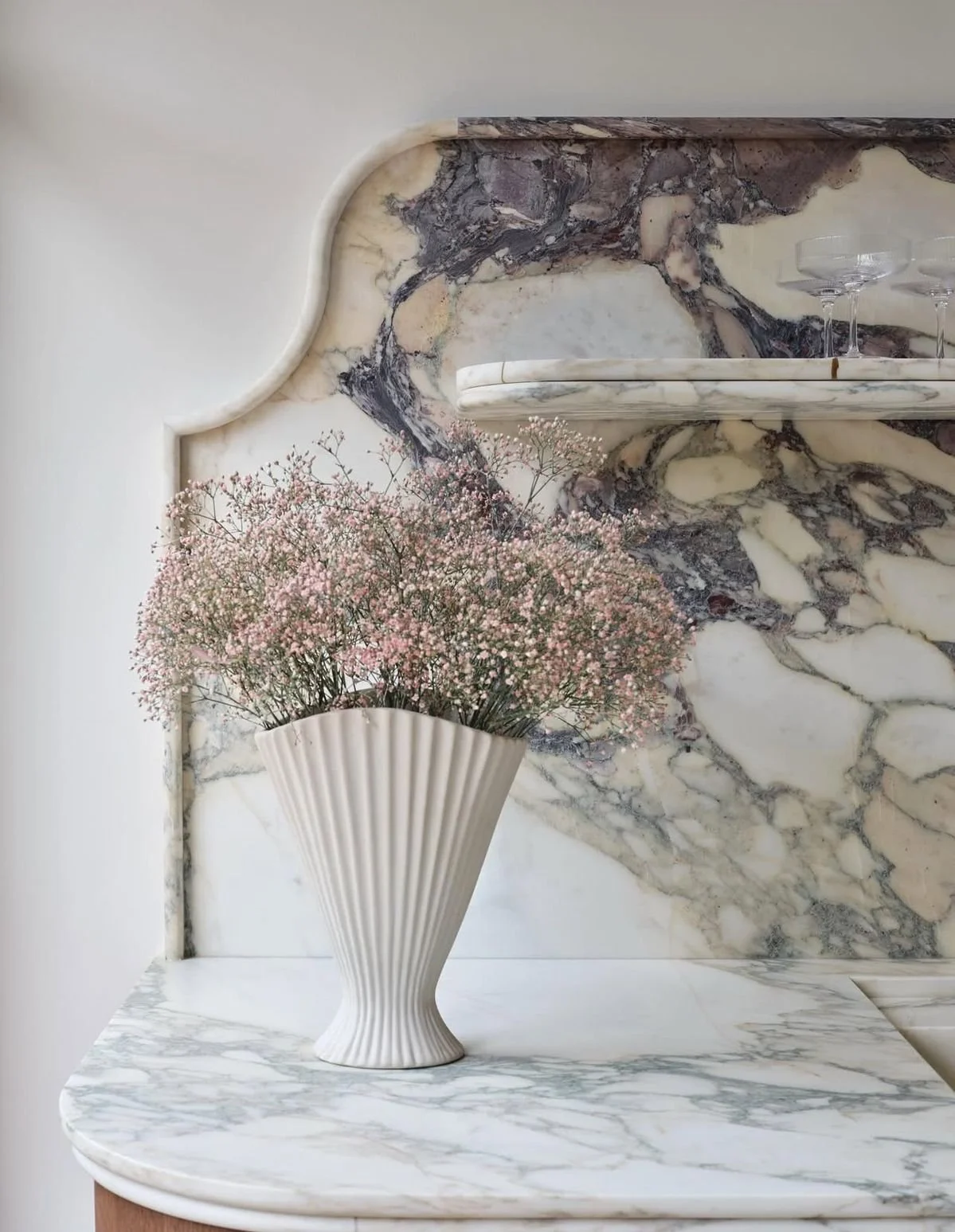
These curved profiles are also practical choises. They are more resistant to chipping, safer in daily use, and visually less sharp. As a result, they subtly influence the overall atmosphere of the space, making it feel more relaxed and approachable. At a higher level of craftsmanship, the ogee edge introduces a more pronounced presence. Its S-shaped curve brings a sense of classic refinement and detail. It defines the countertop. However, it requires careful proportion and context. In a clean, contemporary setting, it can easily feel excessive if not thoughtfully integrated.
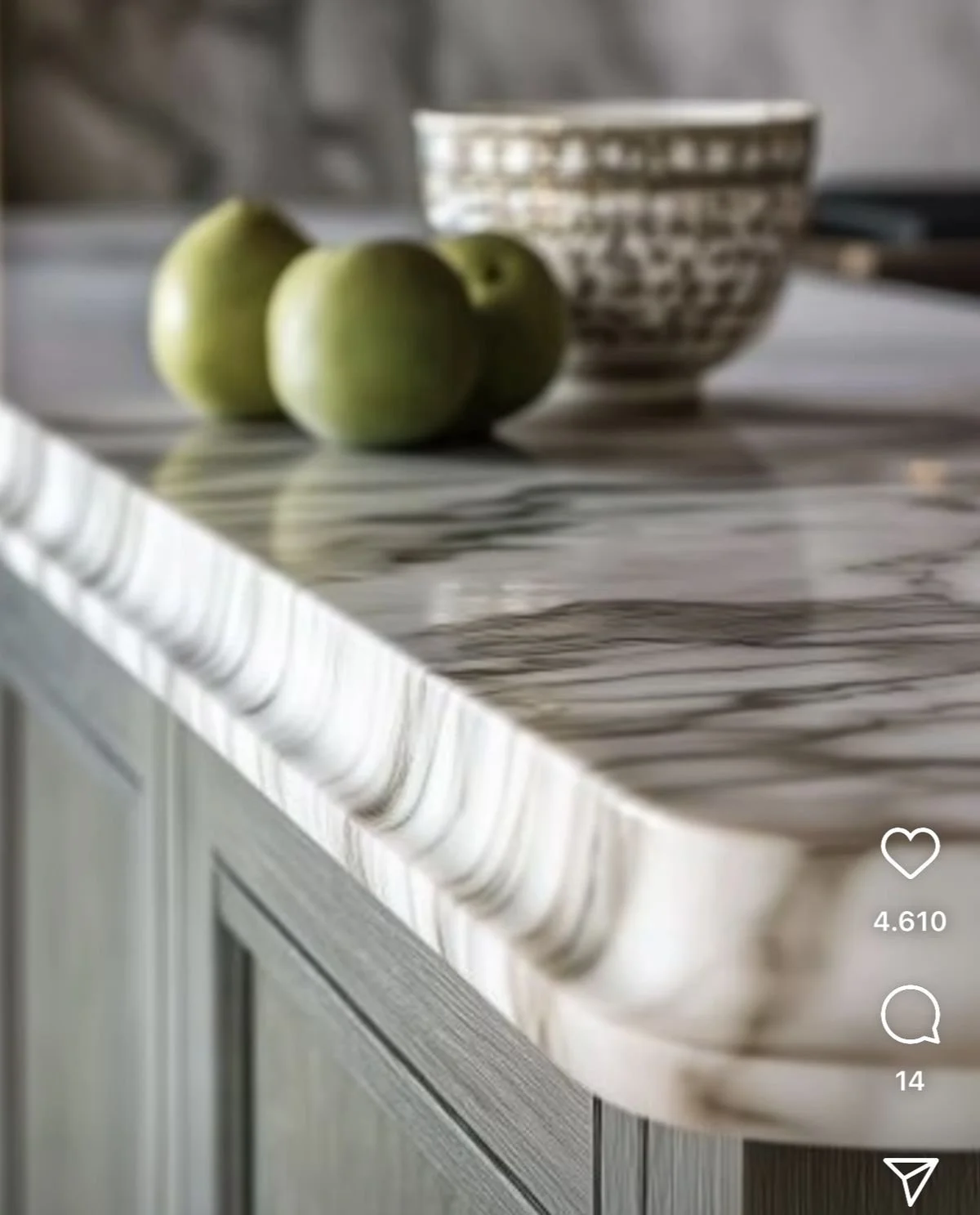
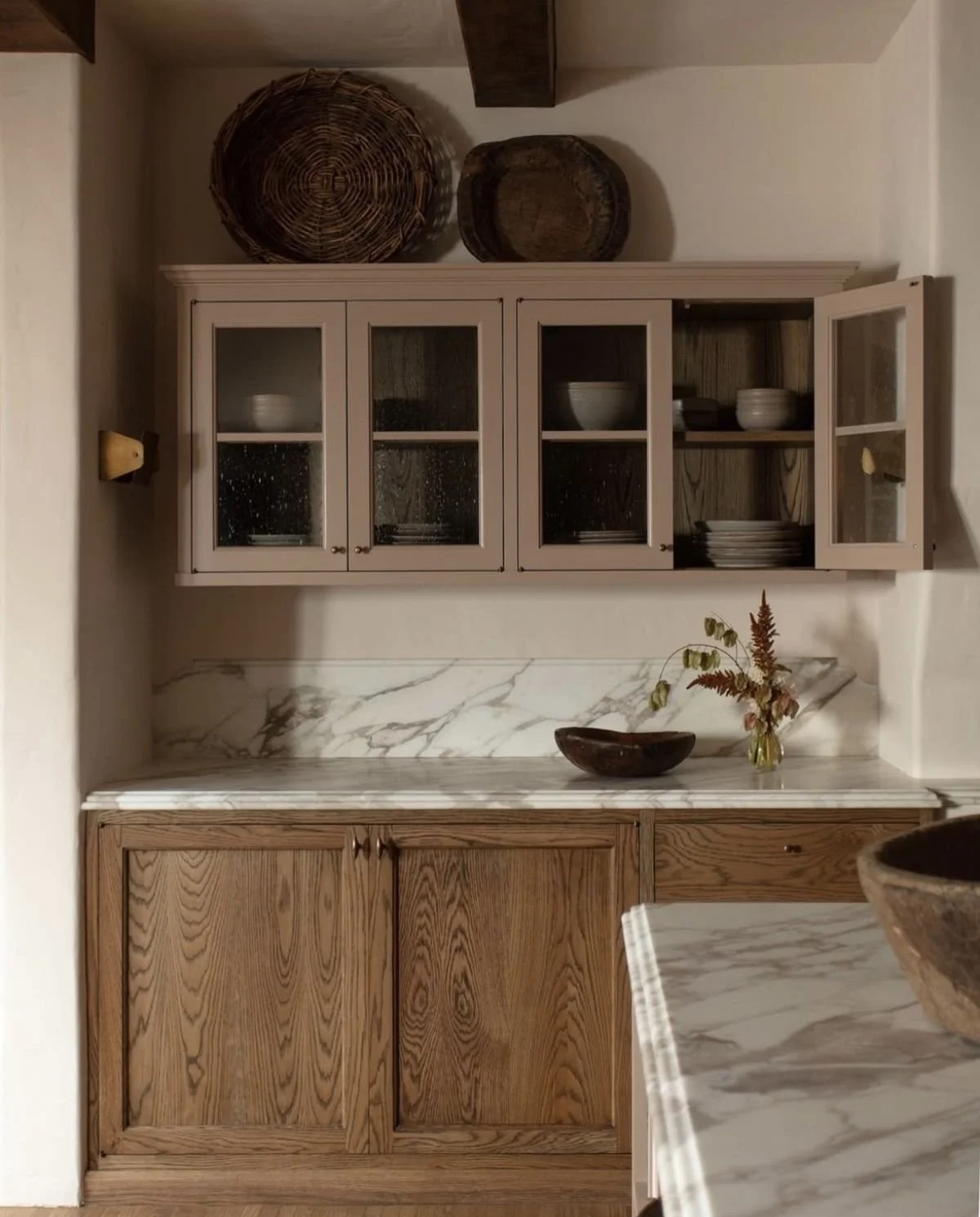
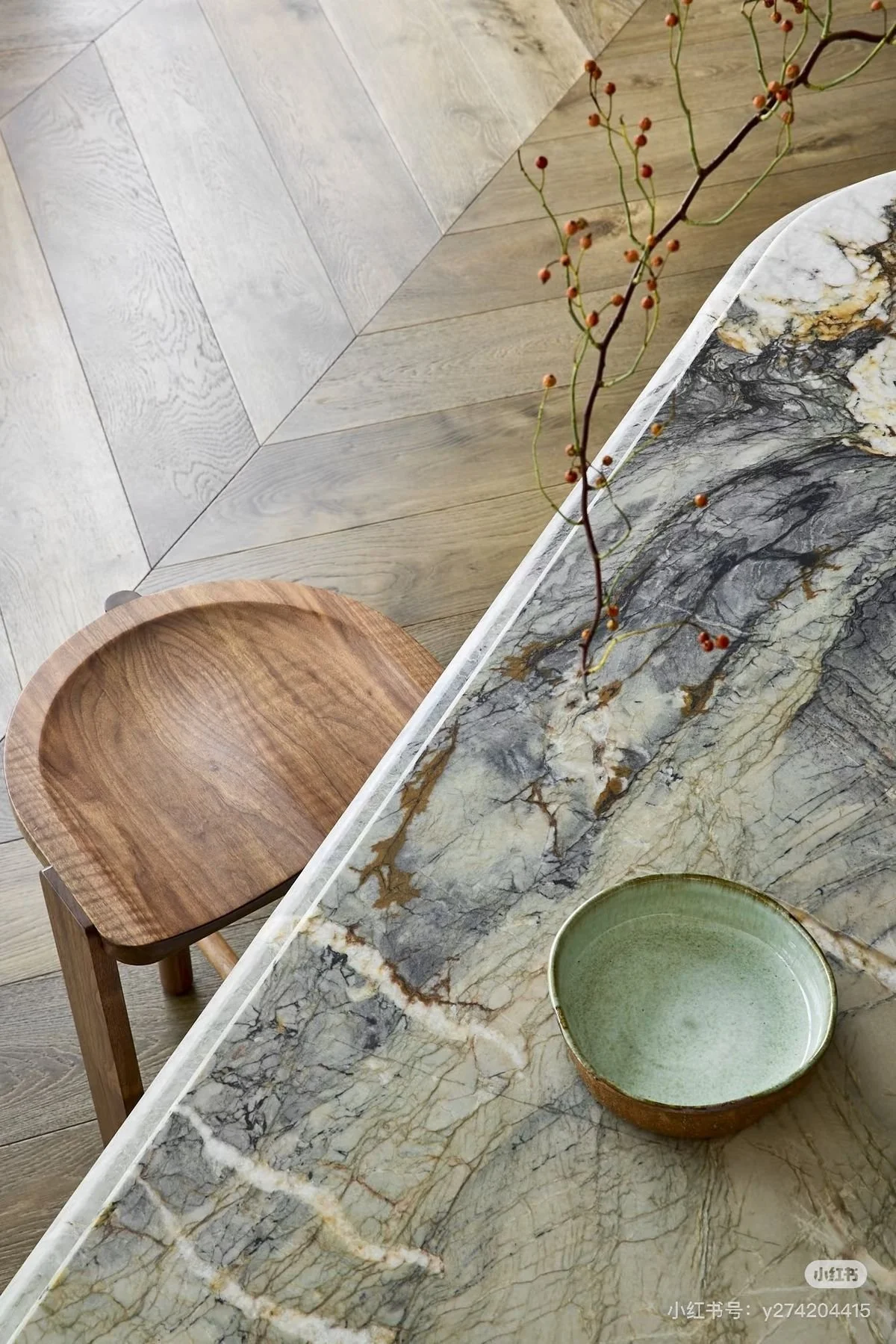
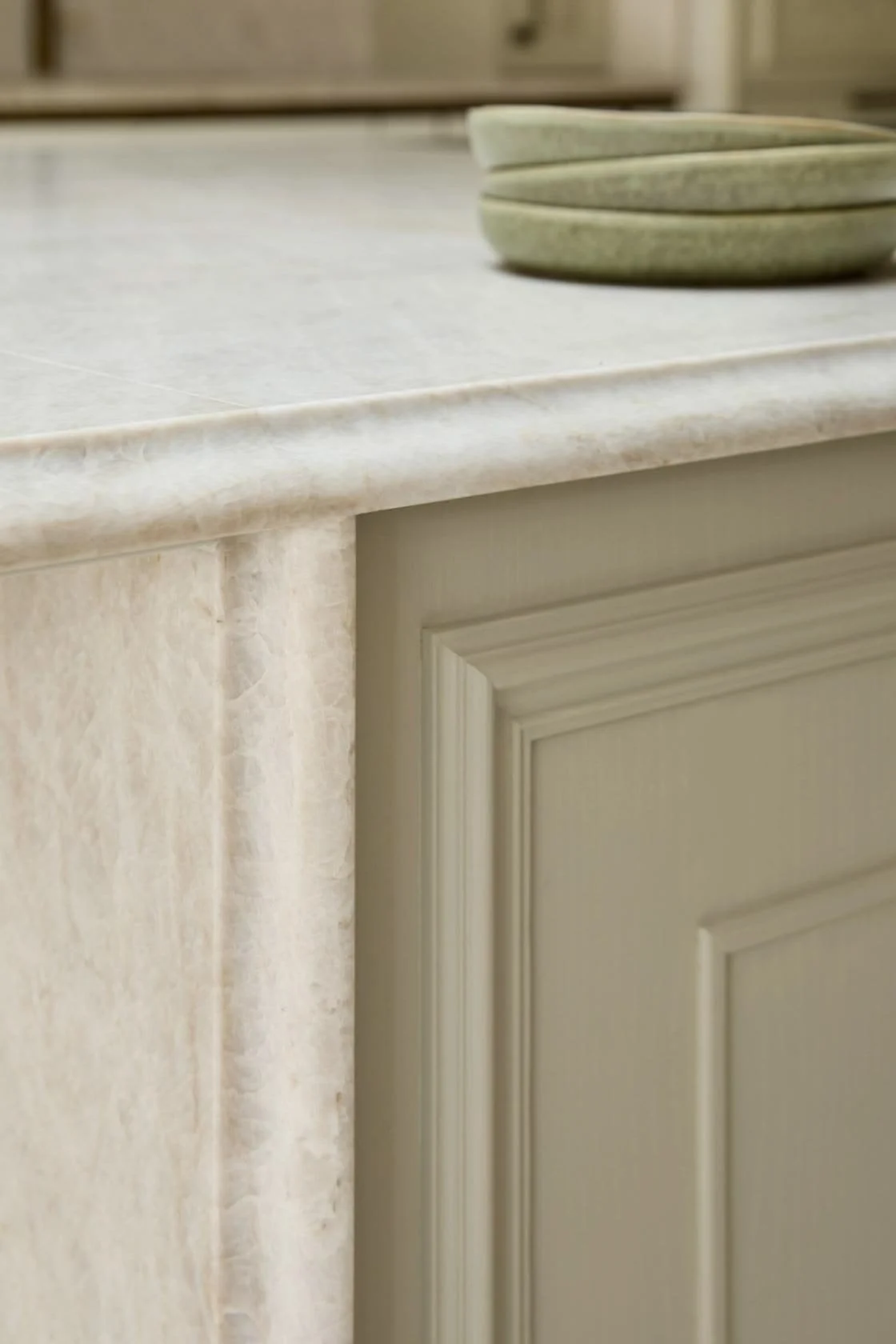
In contrast, the mitered edge belongs to a more contemporary architectural language. Rather than introducing a new shape, it is a technical solution. The edge is joined at a 45-degree angle to create the illusion of a thicker slab. The result is a strong, monolithic appearance, particularly effective on kitchen islands where a more grounded visual presence is desired.
This idea extends further with the waterfall edge, where the countertop material continues vertically down the sides. At this point, the edge itself almost disappears, replaced by a continuous architectural gesture. It is no longer just a detail, but a defining element of the space. The effect is powerful, yet it only works when supported by high-quality materials and precise execution.
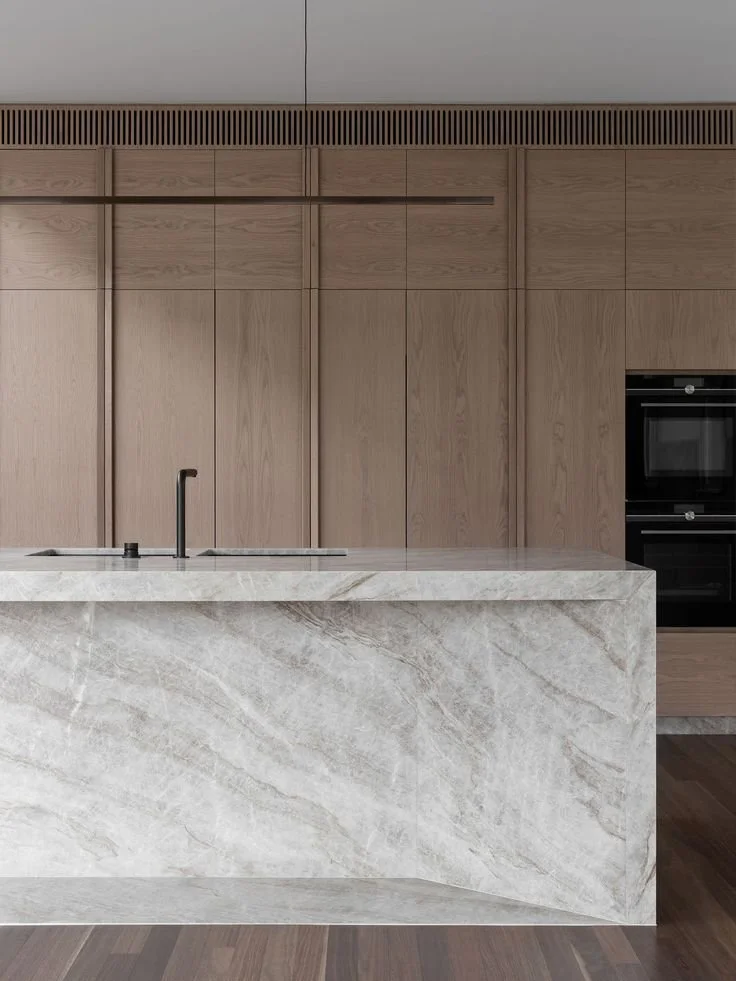
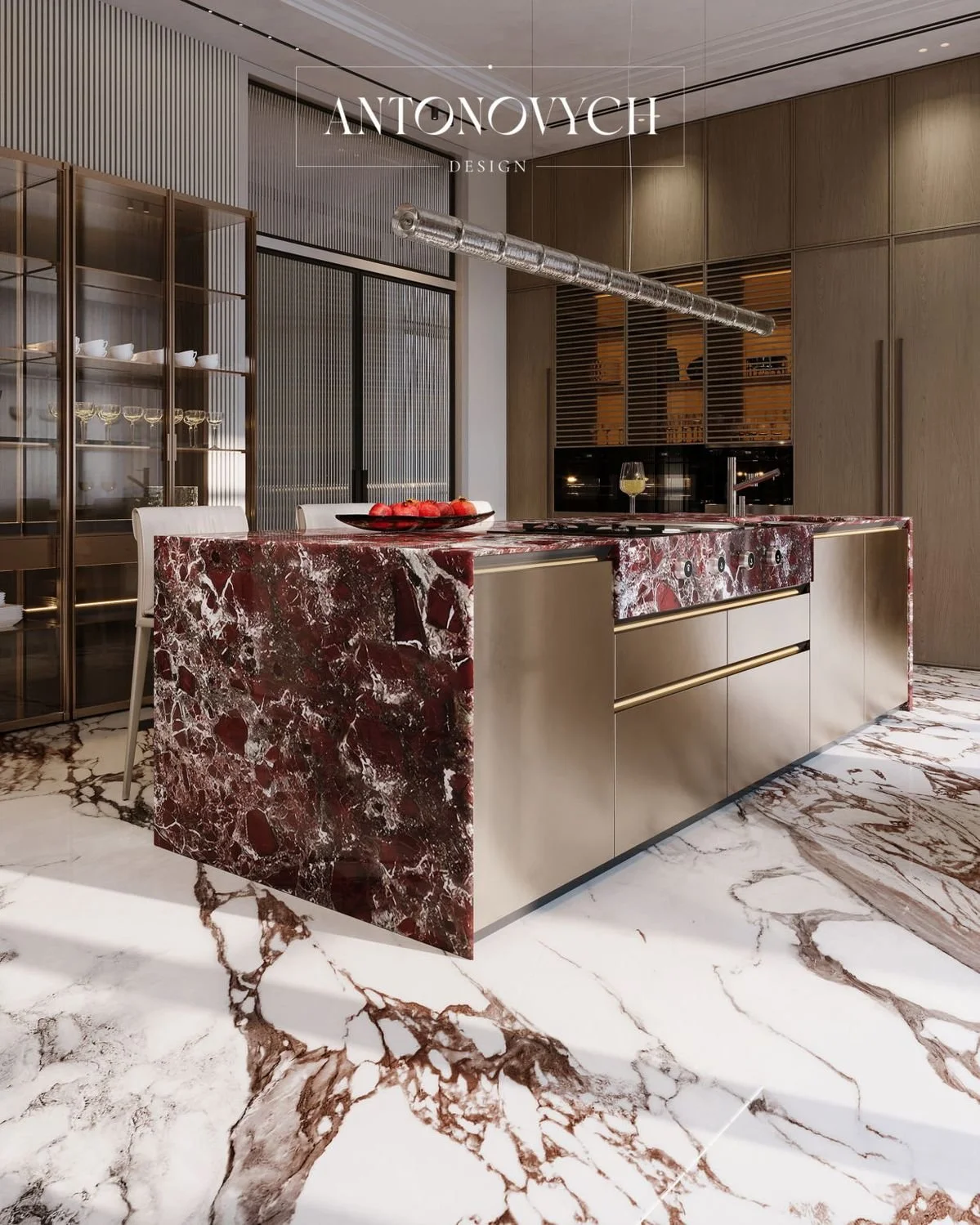
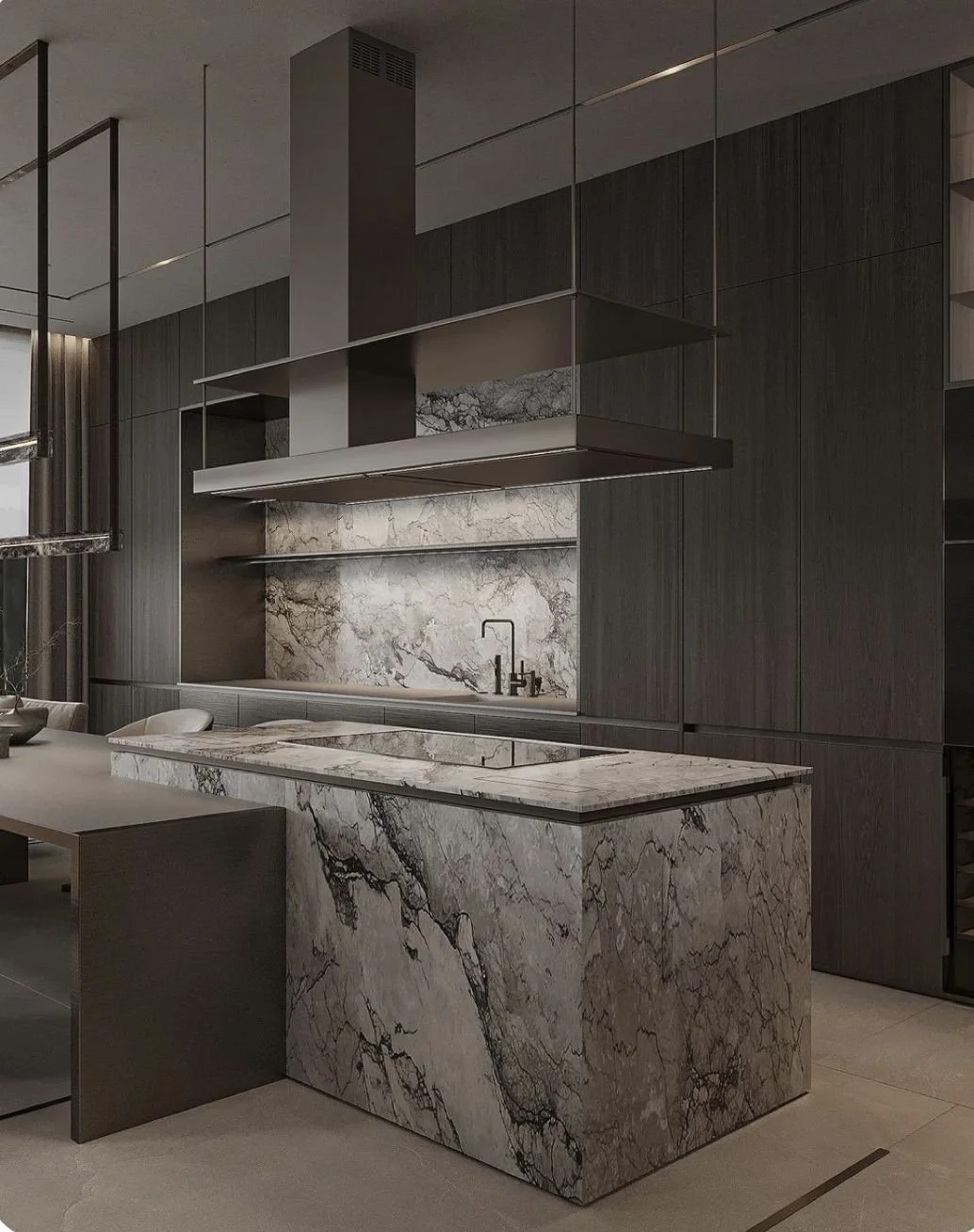
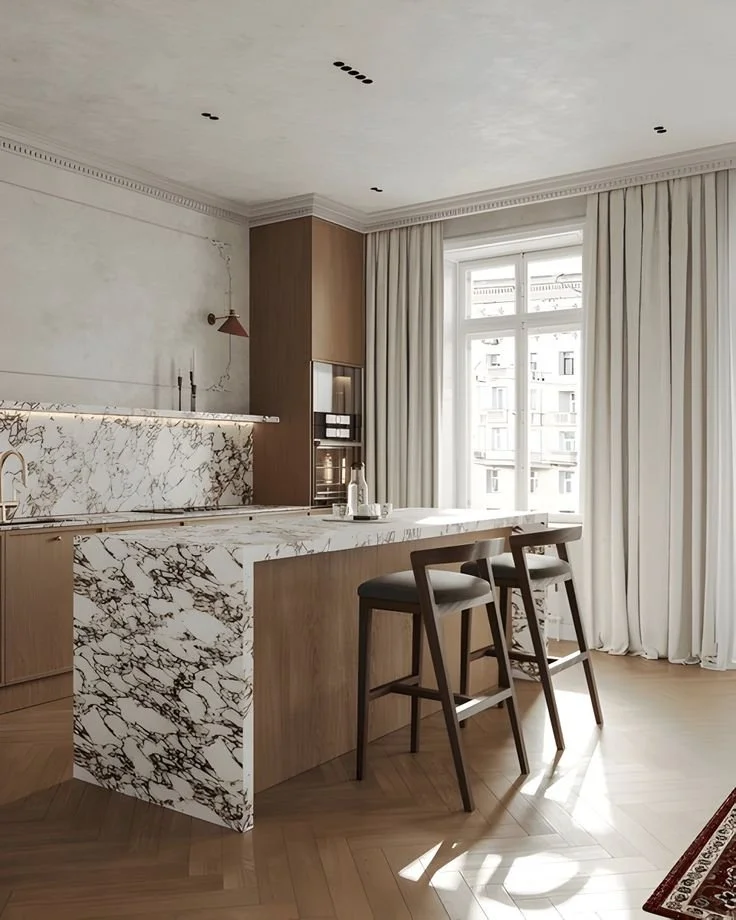
Choosing between these edge profiles is not simply a matter of style. It is about proportion, material understanding, and the way the space will be used. A thinner countertop requires a different approach than a thick, sculptural one. A kitchen designed for everyday family life calls for different decisions than a second home, where the focus is on presence, hosting, and slowing down. Edge profiles directly influence how a space is perceived. A sharper edge introduces structure. A softer one creates ease. A thicker edge adds weight. A beveled detail introduces subtle articulation.
In a well-designed kitchen, the edge is never an afterthought. It is part of the overall concept, just like materials or lighting. The question is not which one is more beautiful, but which one works precisely in that space, for that lifestyle. Just as with countertop edges, the quality of an entire home is defined by these subtle decisions. The ones that may not be immediately visible, yet shape how you feel in the space every single day.
This is exactly what our Signature Design service is about. A carefully considered, high-level design process where every decision — from the floor plan to the finest edge detail — moves in the same direction. We think in cohesive spaces that naturally align with your life, your rhythm, and the level of quality you represent. This process is for those who do not want to compromise, yet also do not wish to spend their time managing every detail. For those who value clarity, precision, and the quiet confidence that comes when everything falls into place. If you are envisioning a home where every detail works with effortless naturalness, then this collaboration may be your next step.
Write to us, and let’s explore how we can create this level of quality in your space.