Designing a Calm Bedroom
There’s an intriguing contradiction I often notice in my projects. Many bedrooms are beautiful, yet somehow it’s hard to truly unwind in them. The furniture is carefully curated, the view is pleasing, and yet… something essential is missing. More often than not, the reason is the same, decoration takes precedence over the fundamentals. A serene bedroom doesn’t start with pillows or wall colors. Designers begin with the proportions of the space, circulation flow, lighting, and materiality. Only once these layers are in harmony do textiles, scents, and decorative elements come into play.
In this article, I share the five foundational principles that interior designers use to create bedrooms where both the body and nervous system can genuinely slow down.


A Calm Bedroom Always Begins with Function
A bedroom’s purpose is not to impress or showcase, it is to support rest. The first question in any design process is, how do we move within this space? A well-functioning bedroom has a simple, clear layout. Circulation paths never intersect with the relaxation zone, there’s enough space around the bed for comfortable movement, and there are no unnecessary pieces of furniture. A crowded space or unclear functional zones keep the nervous system on alert, making true rest impossible.
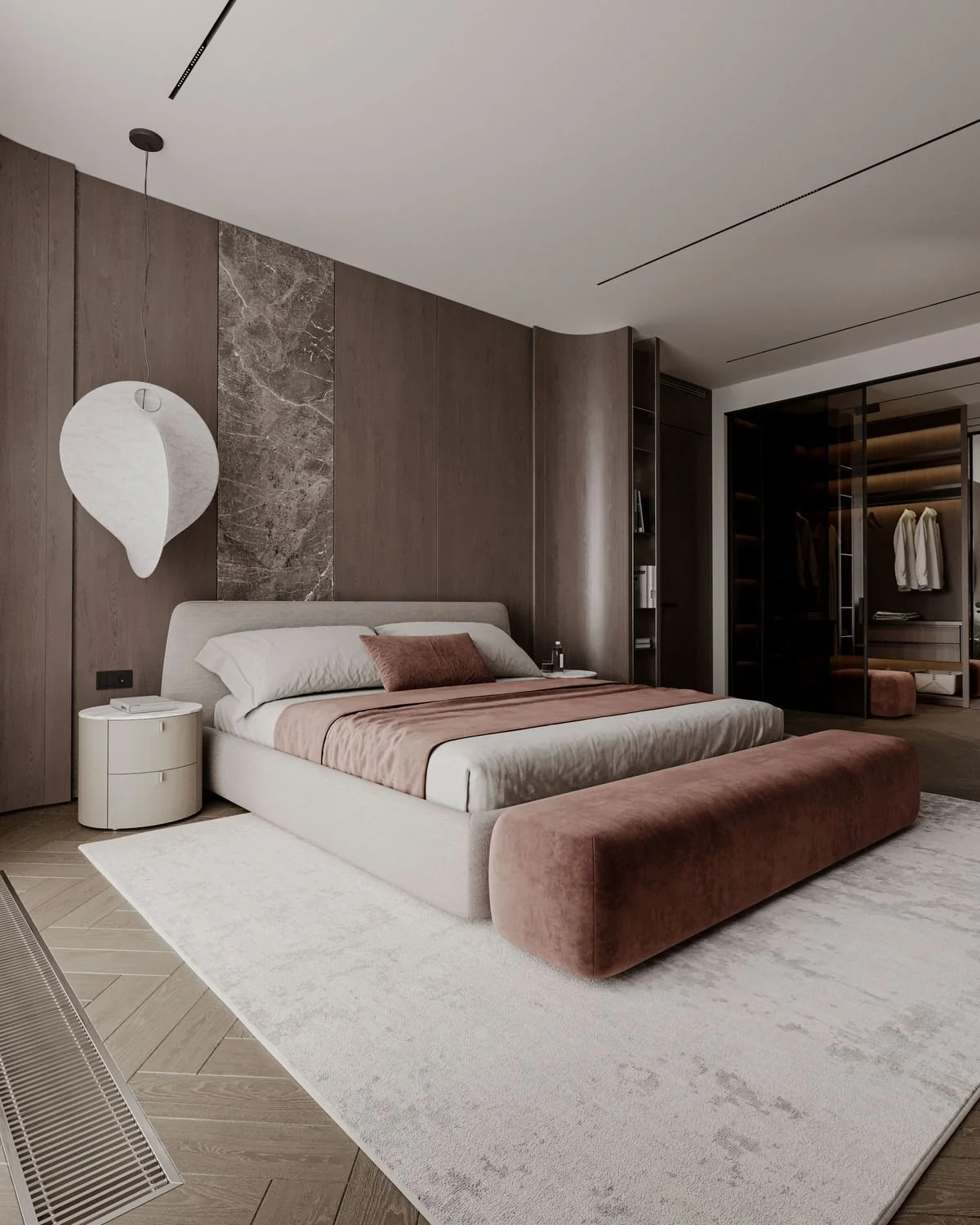
In a well-designed bedroom, only a few key elements are needed. The bed as the central point of rest, one or two bedside tables or floating shelves for essentials, a statement pendant, wall sconce, or bedside lamp, a soft rug underfoot, and built-in storage solutions that keep the space uncluttered. Perhaps a dresser or a vanity with a lounge chair, if the room’s proportions allow.
Warmth Begins with Materials, Not Color
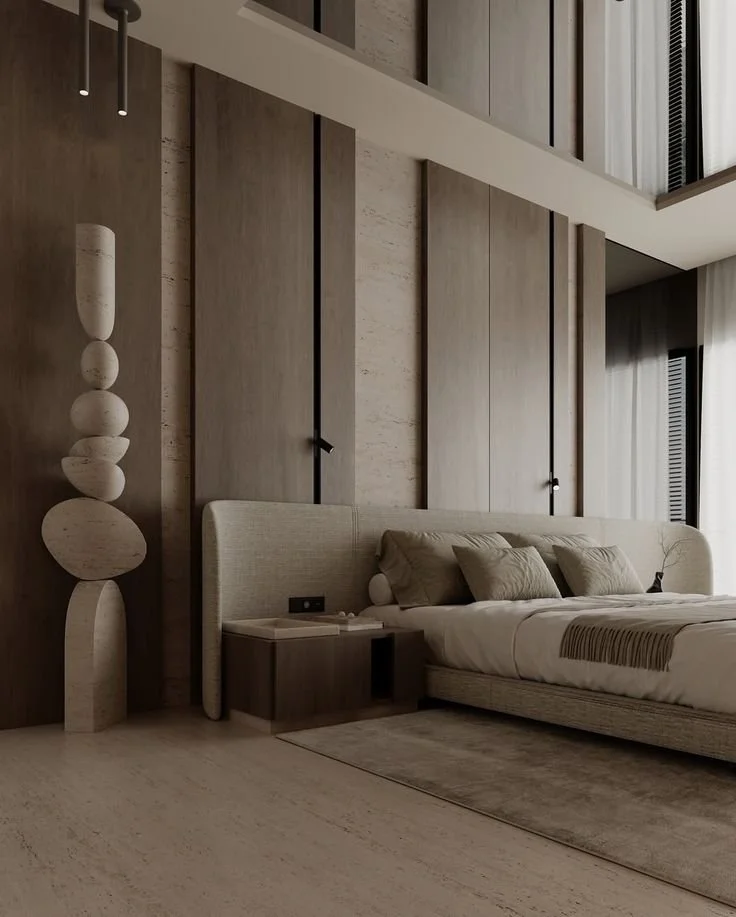
Many believe a calm bedroom depends on the color palette. In reality, it’s the materials that set the mood. A space feels truly inviting when surfaces are tactilely soft and warm. Matte finishes work particularly well, as light reflects softly rather than harshly, making the room feel quieter and gentler. Layered textures give depth, especially when working with restrained, neutral tones.
For instance, a bedroom might layer textures like this:
A soft wool rug on the floor
Linen bedding
Bouclé or velvet upholstery at the headboard
Silky draping curtains
This combination brings warmth without crowding the space.
Neutral Palettes Set the Tone for Calm
Neutral tones remain the most reliable foundation in bedrooms, as they soothe the visual system and support relaxation. In 2026, earthy shades are still highly favored. I lean toward taupe, off-white, subtle terracotta, and gentle greens. They naturally encourage a sense of calm.
Layered Lighting Creates Evening Ambiance
Lighting is one of the most important, yet frequently overlooked layers in a bedroom. Too often, a single ceiling fixture is relied upon. While visually simple, this approach can be mentally exhausting over time. Layered lighting is key. General lighting ensures the entire room is functional. Spotlights, track systems, or understated chandeliers work beautifully. Task lighting, such as bedside lamps, wall sconces, or pendants, allows reading without illuminating the entire room. Mood lighting, concealed LEDs or low-intensity lamps supports relaxation and slows down the nervous system. A night-time path lighting ensures safe movement without disturbing a partner’s sleep.

Textiles Provide the Final Layer of Comfort
Once the foundations are in place, textiles arrive as the ultimate decorative layer. Bedroom fabrics create mood and acoustically soften the space. Even when other shading solutions exist, I often pair sheer curtains with blackout layers. They dress the room and create an intimate, cocoon-like ambiance. A bedroom is not meant to impress anyone but you. When these principles guide your design, you create a space that nurtures sleep, supports slowing down, and awakens you with energy in the morning. This is timeless home elegance born from conscious design.
For a deeper dive into creating serene, harmonious bedrooms, explore our The Foundations of a Calm & Beautiful Home e-book and discover how Flow & Function can transform your living space into a haven of elegance and ease.